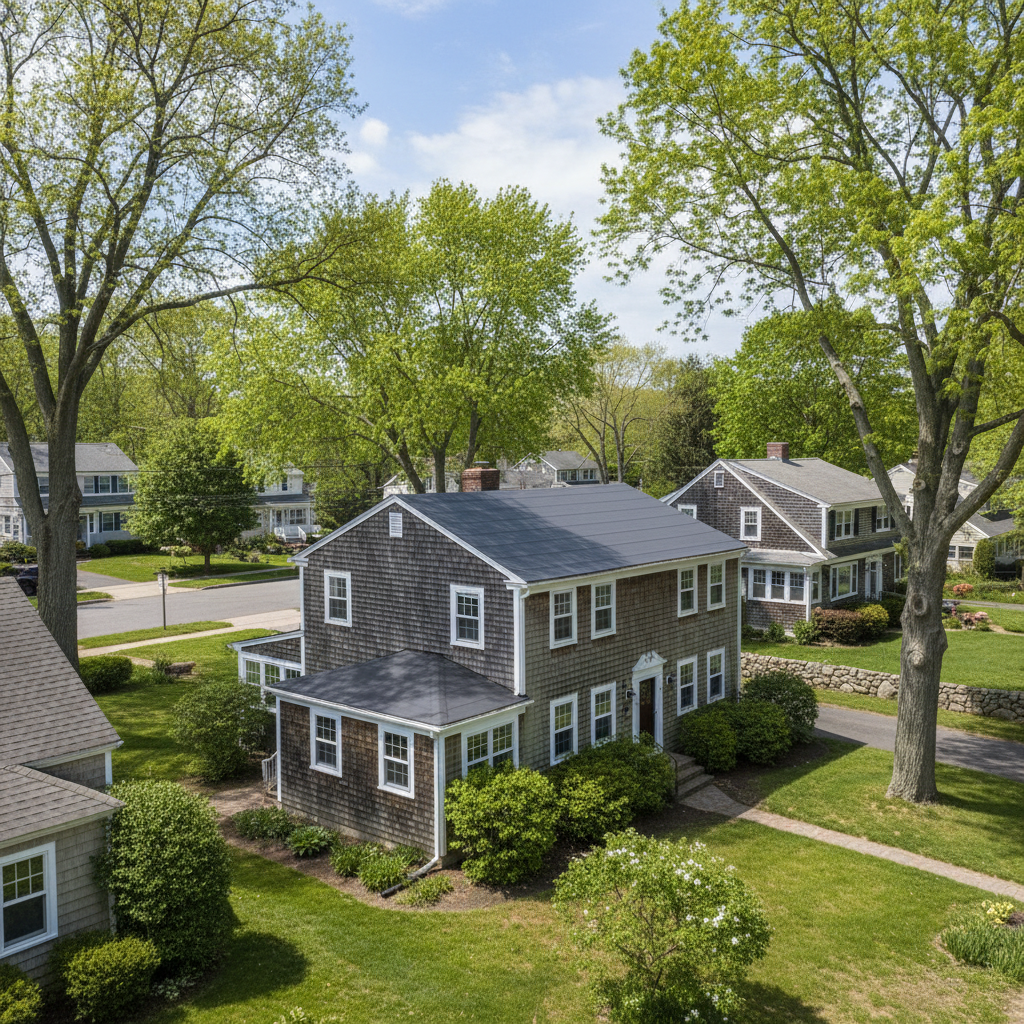
Flat roofs. When you hear that, most folks picture big commercial buildings or maybe some industrial spot down by the water. But you know what? I'm seeing more and more of them right here in North Kingstown, especially on modern additions, garages, and even some of those sleek, contemporary homes popping up around places like Wickford Point. They've got a clean look, and they can be really practical, but they're a whole different animal compared to your typical pitched roof, aren't they?
Not Your Grandfather's Tar and Gravel
For a long time, 'flat roof' meant 'tar and gravel.' While that's still around, the technology has come a long, long way. When I'm talking to homeowners or even some small business owners in town about flat roofing options, we're usually looking at things like TPO, EPDM, or modified bitumen. These aren't just fancy names; they're engineered materials designed to stand up to our New England weather. You've got the hot, humid summers, the brutal winters with heavy snow loads, and those spring rainstorms that just don't quit.
TPO, for example, is a single-ply membrane that's really durable and energy-efficient. It's often white or light-colored, which helps reflect sunlight and keep your building cooler in the summer – a big plus when you're trying to save on AC bills, right? EPDM is another single-ply option, often black, and it's known for its incredible longevity and resistance to UV rays. Modified bitumen is a bit more like a modern take on the old built-up roof, often installed in layers with a torch or adhesive. Each has its pros and cons, and what's right for a garage roof in Lafayette might be completely different from a sunroom addition in Saunderstown.
The Pitch Isn't Zero: Drainage is Key
Here's the thing that trips a lot of people up: a 'flat' roof isn't actually flat. If it were, water would just sit there, and you'd have a pond on your roof, leading to all sorts of problems. We call it 'low-slope' roofing for a reason. There's always a slight pitch, just enough to direct water toward drains or scuppers. Getting that slope right, and making sure the drainage system is properly designed and installed, is absolutely critical. We've seen plenty of issues over the years from roofs that didn't drain properly, leading to standing water, premature aging of the membrane, and eventually, leaks.
Think about the amount of rain we get here in Rhode Island, especially during those nor'easters. If that water isn't moving off your roof, it's going to find a way in. That's why I always stress the importance of proper installation. It's not just slapping down a membrane; it's about the substrate, the insulation, the flashing around penetrations like vents or skylights, and that all-important drainage plan.
Why Local Expertise Matters for Flat Roofs
You might think a roof is a roof, but with flat roofing, local conditions play an even bigger role. The freeze-thaw cycles we experience here in North Kingstown can really put stress on seams and materials. Heavy snow loads mean your roof structure and membrane need to be strong enough to handle the weight without deflection that could create ponding areas. And let's not forget the salt air if you're closer to the Narragansett Bay.
When you're looking at a flat roof project, you want someone who has dealt with these exact conditions, not just some out-of-state crew passing through. We know the building codes, we know the common issues specific to our area, and we're here year-round if you need us. At Spectrum Roofing Solutions, we take pride in doing things right the first time, especially with something as critical as a low-slope roof. It's an investment, and you want it to protect your property for decades, not just a few seasons.
So, if you're considering a flat roof for an addition, a commercial building, or even a unique architectural home, let's talk. We can walk you through the options, explain the pros and cons for your specific situation, and make sure you get a roof that's built to last in our Rhode Island climate.