Before You Even Look Up: Safety First, Always
Alright, let's chat about checking out your roof. Before you even think about grabbing a ladder or stepping onto your roof, you absolutely have to consider safety. Seriously, this isn't something to take lightly. Falls from roofs are no fun at all, and they happen way more often than you might guess. If you're not comfortable on a ladder, or if your place has a really steep pitch, like some of those older homes up around Wickford Village, just don't do it. It's simply not worth a broken bone or something even worse. That's when you should call someone like me, or another trusted contractor. We've got the right gear, the training, and, importantly, the insurance. Your safety is always our top priority.
Now, let's say you're planning a ground-level inspection, or maybe you're totally comfortable and safe on a ladder. Here's what you need to know before you start. Pick a clear, calm day for this. You definitely don't want to be up there when it's windy, wet, or icy. Grab a good pair of binoculars, a notepad, and your phone for taking pictures. Oh, and make sure someone knows you're doing it, just in case.
During Your Inspection: What Your Eyes Can Tell You
Okay, you're ready to look. Start from the ground. Walk all the way around your house, taking your time. Look at the roof from every angle you possibly can. What exactly are you looking for?
- Shingles that are curling, buckling, or missing: These are usually pretty obvious. If you spot shingles that look like they're lifting up or have a wavy appearance, that often signals aging or damage. Missing shingles? That's a direct invitation for water to get in.
- Granule loss: See any dark spots or bald patches on your shingles? That means the protective granules are wearing off. You might even find a pile of them in your gutters or at the base of your downspouts. Once those granules are gone, your shingles become much more vulnerable to UV rays and harsh weather.
- Moss or algae growth: A little bit of green or black streaking isn't always an emergency, but heavy moss growth can trap moisture against your shingles. This can lead to rot and deterioration over time. It's especially common on the north-facing sides of roofs here in North Kingstown, where things tend to stay shadier and wetter for longer.
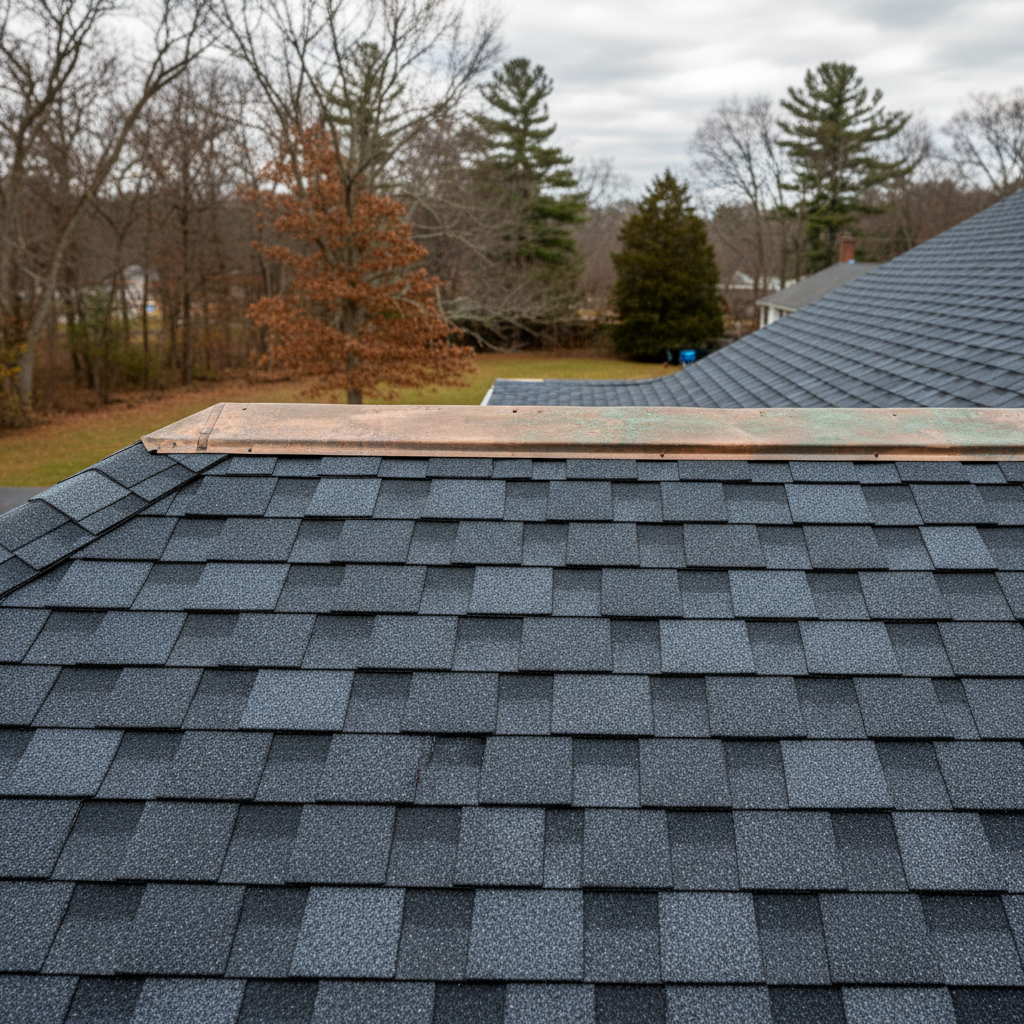
- Damaged flashing: Flashing is that metal material you see around chimneys, skylights, vents, and in those valleys where two roof planes meet. It's absolutely crucial for keeping water out. Look for cracks, rust, or areas where it's pulled away from the roof or wall.
- Sagging areas: From the ground, look along the ridge line and across the main planes of your roof. Does anything look like it's dipping or sagging? That could point to a structural issue or significant water damage underneath.
- Clogged gutters: While not strictly a roof issue, clogged gutters mean water isn't draining properly. It can back up under your shingles, overflow and damage fascia boards, or even cause foundation problems. Clear them out regularly, especially after a big storm.
- Damaged vents or pipes: Check the caps on your plumbing vents and any other roof penetrations. Are they cracked, loose, or missing? Critters, you know, love to squeeze in through these spots.
If you're comfortable on a ladder and can safely get a closer look at the eaves and lower sections, go for it. But again, please don't push your comfort level. Take pictures of anything you find concerning. It'll be super helpful if you need to show a professional later.
After Your Visual Check: What to Do Next
So, you've finished your walk-around. You've got your notes and pictures. What happens now?
If you didn't see anything major – no missing shingles, no obvious damage, no sagging – that's fantastic! You've got a good handle on your roof's current state. I'd still suggest doing this kind of visual check at least twice a year, maybe in the spring after the winter storms and again in the fall before the snow flies. Also, always after any major storm with high winds or hail. Even if you don't see anything, a professional inspection every few years is just a smart move. We can spot things you might miss, especially from up close.
If you *did* find some issues – a few missing granules, a bit of moss, maybe a small crack in the flashing – you've got a decision to make. Some minor things, like clearing gutters, you can absolutely handle yourself. But for anything that involves getting on the roof to fix shingles, repair flashing, or address structural concerns, that's when you really need to call in a professional. Don't try to patch a major leak yourself; you could easily make it worse and end up with much more expensive interior damage. Believe me, I've seen it happen.
When you call us at Spectrum Roofing Solutions, or another local contractor, be ready to share what you saw. Those pictures you took? They'll be a big help. We'll come out, do a thorough inspection – often getting up on the roof where it's safe to do so – and give you an honest assessment. We'll tell you what needs immediate attention, what can wait, and what's just normal wear and tear. Our job is to give you the facts so you can make an informed decision, not to push you into something you don't need. Keeping your North Kingstown home protected is what it's all about.